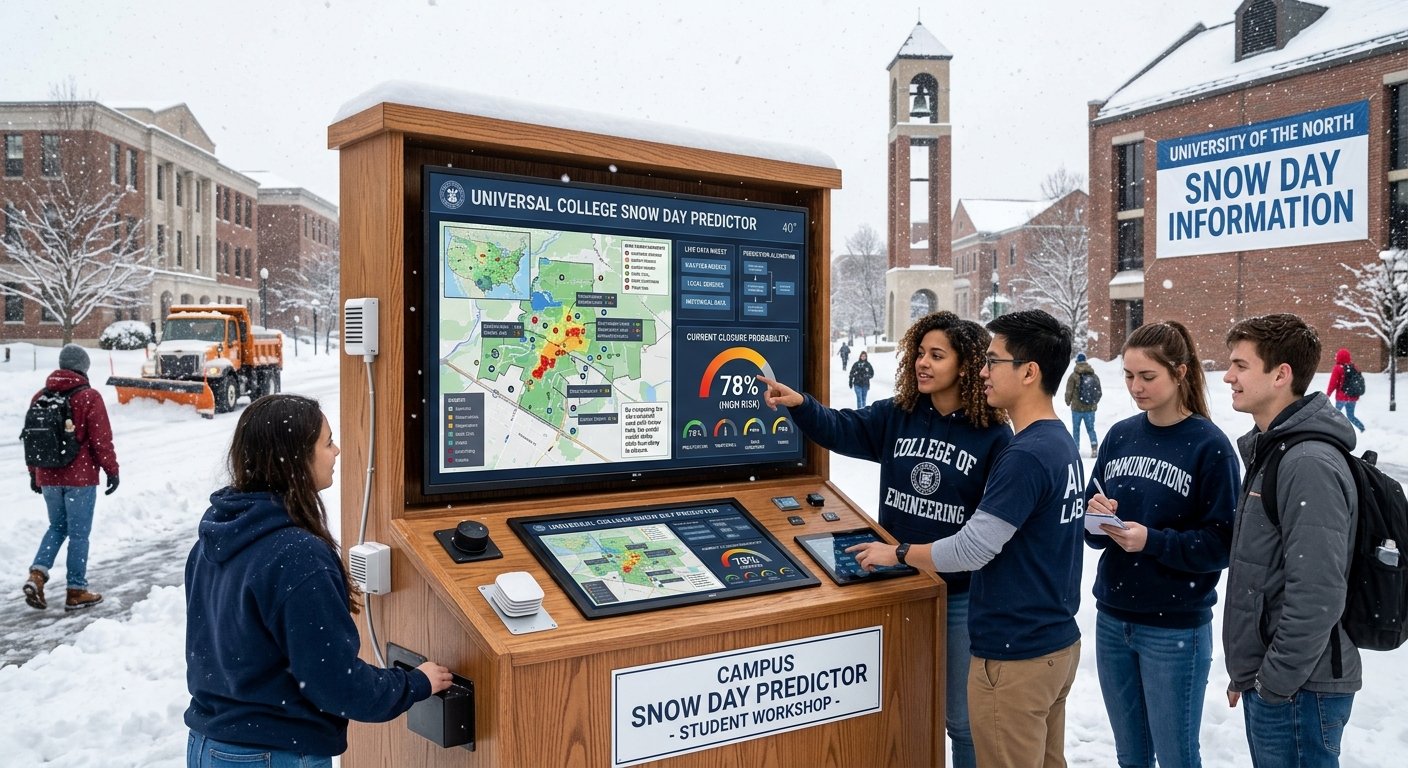
Snow Day Predictor is used by millions of students every winter, but a common question from college and university students is whether the tool actually works for them, or whether it is built only for K-12 schools. The answer is yes: Snow Day Predictor includes a dedicated College option in its school level selector, and understanding how that calibration works helps college students get the most accurate forecast possible for their campus.
How to Use Snow Day Predictor as a College Student
Using Snow Day Predictor for your college or university takes less than 30 seconds.
- Visit snowdaypredictor.xyz
- Enter your campus city name or ZIP code, such as Ann Arbor, Michigan, or 48109 for the University of Michigan
- Select College from the school level dropdown
- Click "Check Snow Day Chances"
- Receive your 7-day probability forecast calibrated specifically to college closure thresholds
Selecting College rather than High School is important. The algorithm applies a different probability modifier for college-level institutions, reflecting the reality that colleges close far less frequently than K-12 schools under comparable weather conditions.
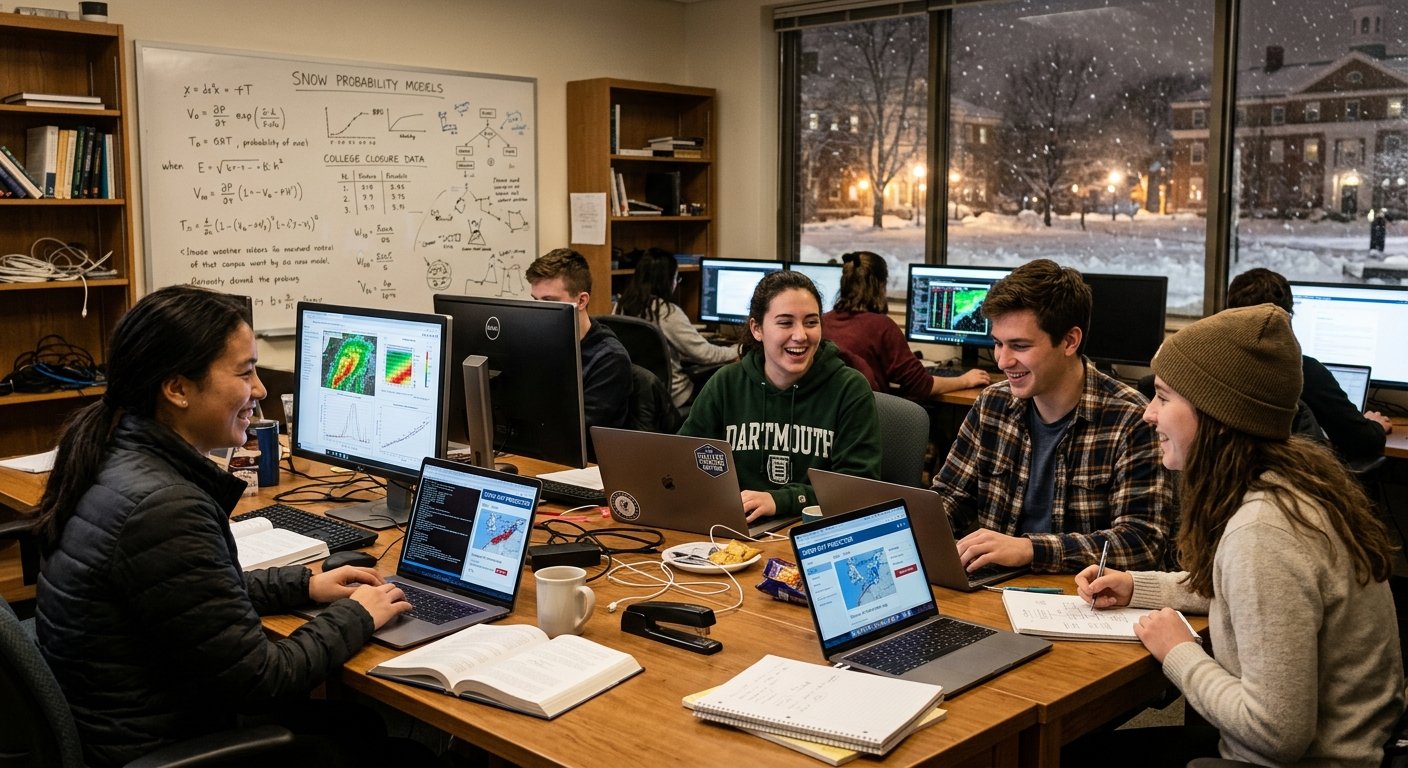
Why Colleges Close Less Often Than K-12 Schools
The single most important thing college students need to understand about snow day prediction is that colleges operate under fundamentally different closure logic than elementary and high schools. This is not arbitrary: it reflects genuine differences in the student population, campus infrastructure, and administrative risk calculus.
College students are adults. Unlike K-12 students, college students are legally adults capable of making their own safety decisions. A university administration that closes campus is not protecting students from weather the way a K-12 district protects children: it is making a judgment that campus infrastructure itself is unsafe to operate, which is a much higher bar.
Campus infrastructure is designed for winter. Most college and university campuses, particularly those in northern climates, have dedicated facilities crews that operate around the clock during winter weather events. Sidewalks, parking lots, and campus roads are typically treated and cleared significantly faster than the public road network. Many residential campuses also have enclosed skybridge or tunnel connections between major buildings, allowing students to move between classes without going outside at all.
No bus routes to manage. The primary driver of K-12 school closures is the safety of bus transportation on public roads over large geographic areas. Colleges do not operate this kind of mandatory transportation network. Residential students live on or adjacent to campus. Commuter students make independent decisions about whether to drive or take public transit. The absence of mandatory bus operations removes the most common closure trigger that affects K-12 decisions.
Alternative instruction options. Most universities and colleges have established remote instruction infrastructure following the experience of the COVID-19 pandemic. Rather than canceling classes entirely, many institutions now shift to remote instruction for severe weather days, meaning a traditional full-day campus closure is less common than it once was even when conditions are significant.
What Does Actually Cause a College Snow Day?
Given how high the threshold is for college closures, the scenarios that reliably produce them are worth understanding specifically.
Blizzard conditions with extreme accumulation. A genuine blizzard, defined by the National Weather Service as sustained or frequent wind gusts of 35 mph or higher with snow reducing visibility to a quarter mile or less for 3 or more hours, combined with heavy accumulation of 12 inches or more, is the most reliable path to a full campus closure. Under these conditions, even dedicated facilities crews cannot maintain safe outdoor conditions, and the risk to any student traveling between buildings becomes genuinely significant.
Extreme cold with dangerous wind chills. The January 2019 polar vortex event, which brought wind chills of -50F or below to parts of the Midwest, resulted in closures at major universities including the University of Michigan, Michigan State University, Ohio State University, and dozens of other institutions. These closures were driven not by snowfall but by wind chill values creating frostbite risk within minutes of outdoor exposure, even on cleared sidewalks and roads.
Ice storms and power outages. A significant ice storm that coats every surface with a half inch or more of ice creates conditions that facilities crews cannot reliably manage. Ice on sidewalks creates fall risk that creates liability regardless of how many crews are working. Combined with ice-related power outages that affect heating systems in buildings, ice storms are one of the more reliable triggers for college campus closures.
Infrastructure failures. A heating system failure across multiple campus buildings, a water main break in freezing temperatures, or widespread power outages caused by the weight of ice on power lines can force campus closures independently of weather conditions that would otherwise not meet the closure threshold.
How Snow Day Predictor Calibrates for College Closures
Snow Day Predictor's College school level option applies a higher-threshold modifier to the probability calculation, reflecting the documented reality that colleges close under more extreme conditions than K-12 schools. This means that the same forecast conditions that might produce a 70% probability for an elementary school generate a lower probability when College is selected, because the algorithm knows those conditions are less likely to trigger a college closure decision.
The probability scores for College selections are most meaningful when conditions are genuinely extreme: forecasts calling for 12 or more inches of snow, blizzard conditions with wind gusts above 35 mph, or wind chill values in the -30F or below range. In these scenarios, even the college-calibrated probability will reflect a meaningful closure likelihood.
For moderate winter weather events, College probabilities will typically remain in the low to moderate range, accurately reflecting the reality that most colleges will either remain open or shift to remote instruction rather than fully closing.
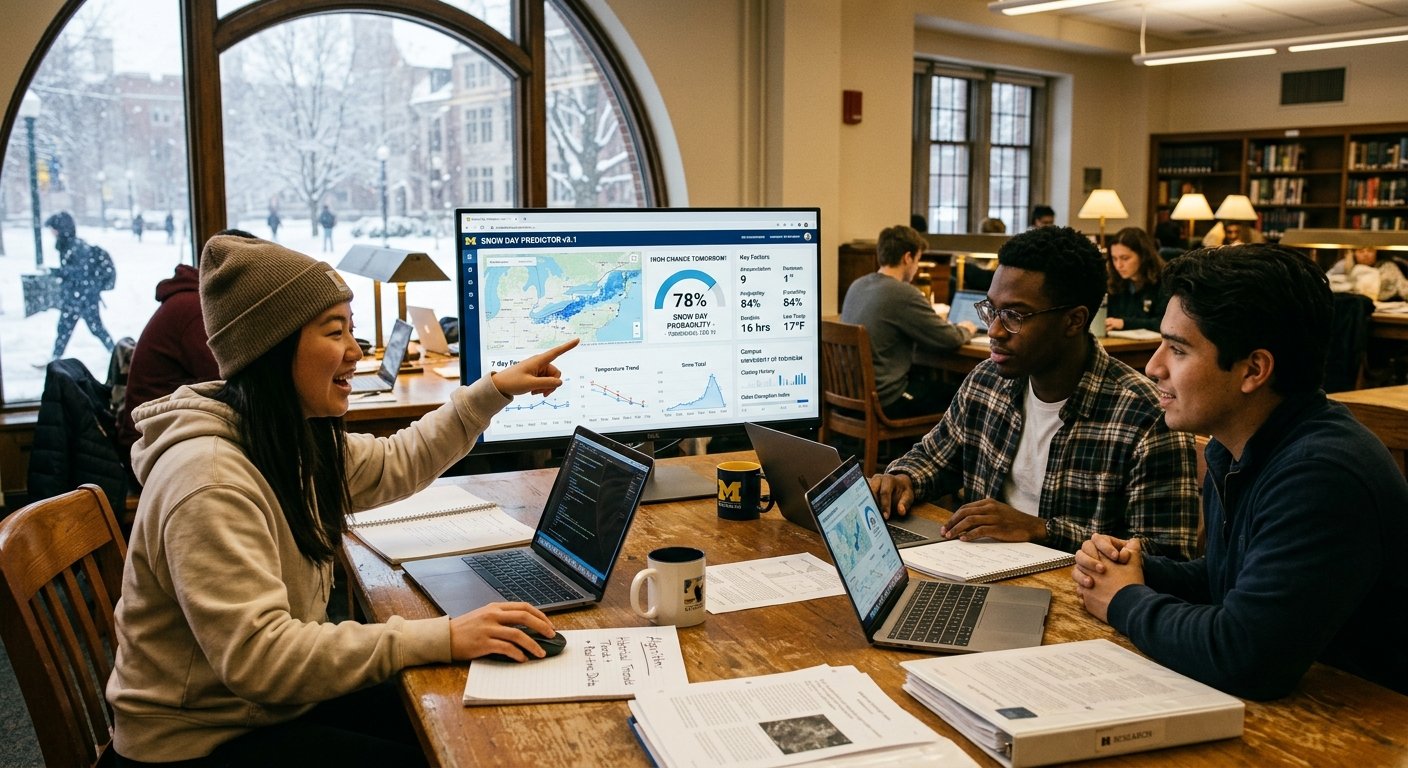
Remote Instruction Days: The Modern College Snow Day
One of the most significant changes in college winter weather operations over the past several years is the widespread adoption of remote instruction days as an alternative to full campus closures. Rather than canceling classes entirely, many universities now announce that classes will be held remotely when weather conditions make in-person attendance unsafe or inadvisable.
This shift means that the traditional concept of a college snow day, in which all academic activity stops for the day, has become less common even as weather conditions that might previously have triggered full closures are now managed through a remote instruction announcement.
For college students, this creates a nuanced situation. A remote instruction day is not a day off in the traditional snow day sense. Classes still meet, assignments are still due, and professors still expect attendance via video conference. However, students do not need to travel to campus, which eliminates the transportation safety risk that drives the decision in the first place.
Snow Day Predictor's college probability scores reflect closure probability in the traditional sense: a full suspension of in-person operations. Remote instruction days are a separate institutional decision that the tool does not specifically forecast.
Tips for College Students Using Snow Day Predictor
Check Snow Day Predictor the evening before a potential storm to understand the severity of incoming weather conditions, even if a full campus closure seems unlikely. A high probability score for your area, even with the College level selected, is a useful signal to prepare your technology for potential remote instruction.
Monitor your university's official communication channels directly. Most universities communicate weather-related decisions, including remote instruction days, through official email, the university website, and official social media accounts. Sign up for your university's emergency notification system to receive time-sensitive communications.
Understand that even a low closure probability from Snow Day Predictor does not mean travel to campus is safe. A 20% closure probability still represents significant winter weather in the forecast. Make your own safety assessment about whether commuting to campus is appropriate for your specific situation, regardless of whether the university has officially closed.
Check Your College Snow Day Probability Right Now
Whether you are a student at a residential university hoping for a campus closure day or a commuter college student trying to decide whether it is safe to drive to class, Snow Day Predictor gives you the most accurate available picture of the weather conditions driving that decision.
Visit snowdaypredictor.xyz and enter your campus city or ZIP code, select College, and see your 7-day probability forecast instantly, completely free.