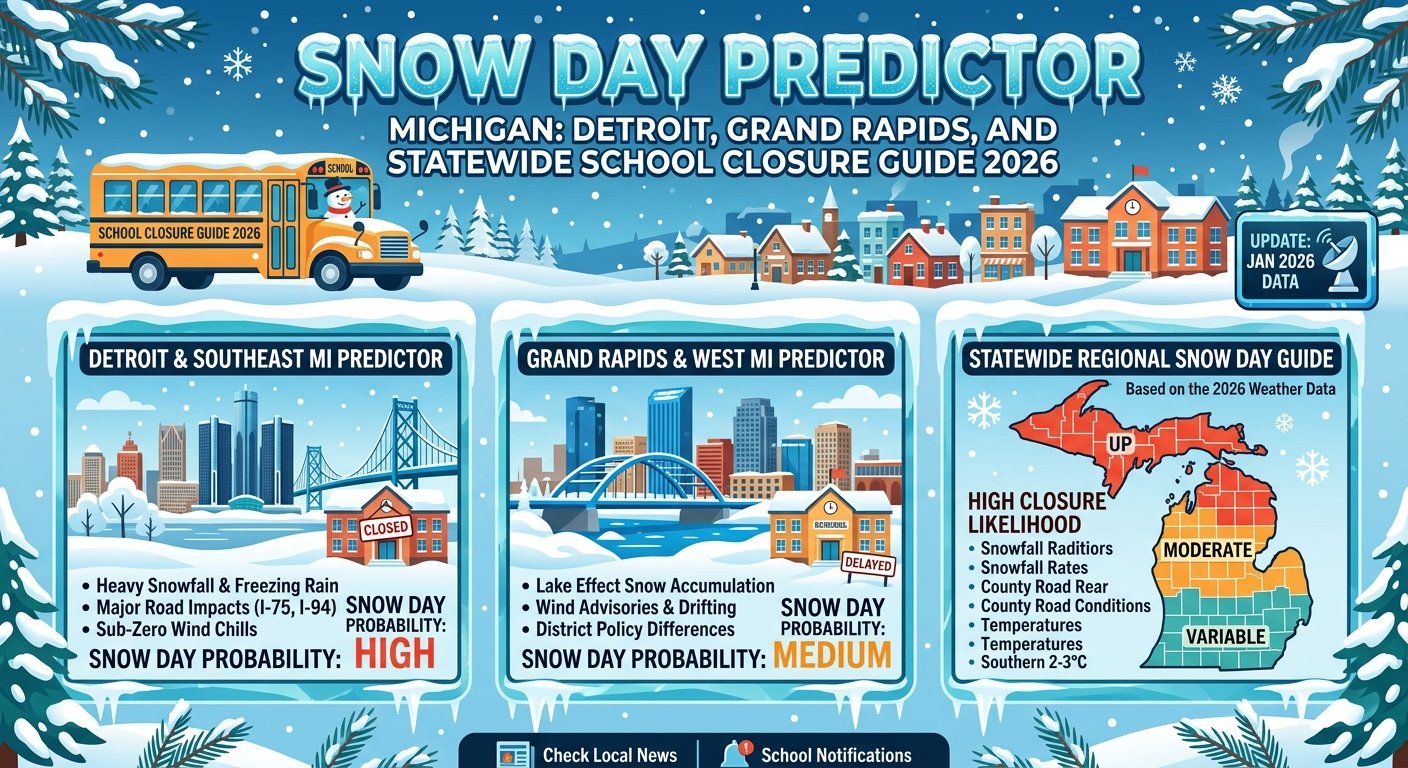
Michigan sits at the heart of the Great Lakes region and experiences some of the most intense and varied winter weather conditions in the entire United States. The state's unique geography, bordered by four of the five Great Lakes, creates a winter weather environment unlike anywhere else in North America, where lake-effect snow systems from multiple directions can bury communities under feet of snow within hours. Whether you are a student in Detroit, a parent in Grand Rapids, or a family anywhere across the Upper or Lower Peninsula, Snow Day Predictor delivers a free, 7-day school closure probability forecast for any Michigan city or ZIP code.
How to Check Michigan Snow Day Chances
Checking your Michigan snow day probability takes less than 30 seconds.
- Visit snowdaypredictor.xyz
- Enter your Michigan city name such as Detroit, Grand Rapids, Lansing, Ann Arbor, Flint, or Marquette, or type your ZIP code directly
- Select your school level: Elementary, Middle School, High School, or College
- Click "Check Snow Day Chances"
- Receive your free 7-day snow day probability forecast instantly
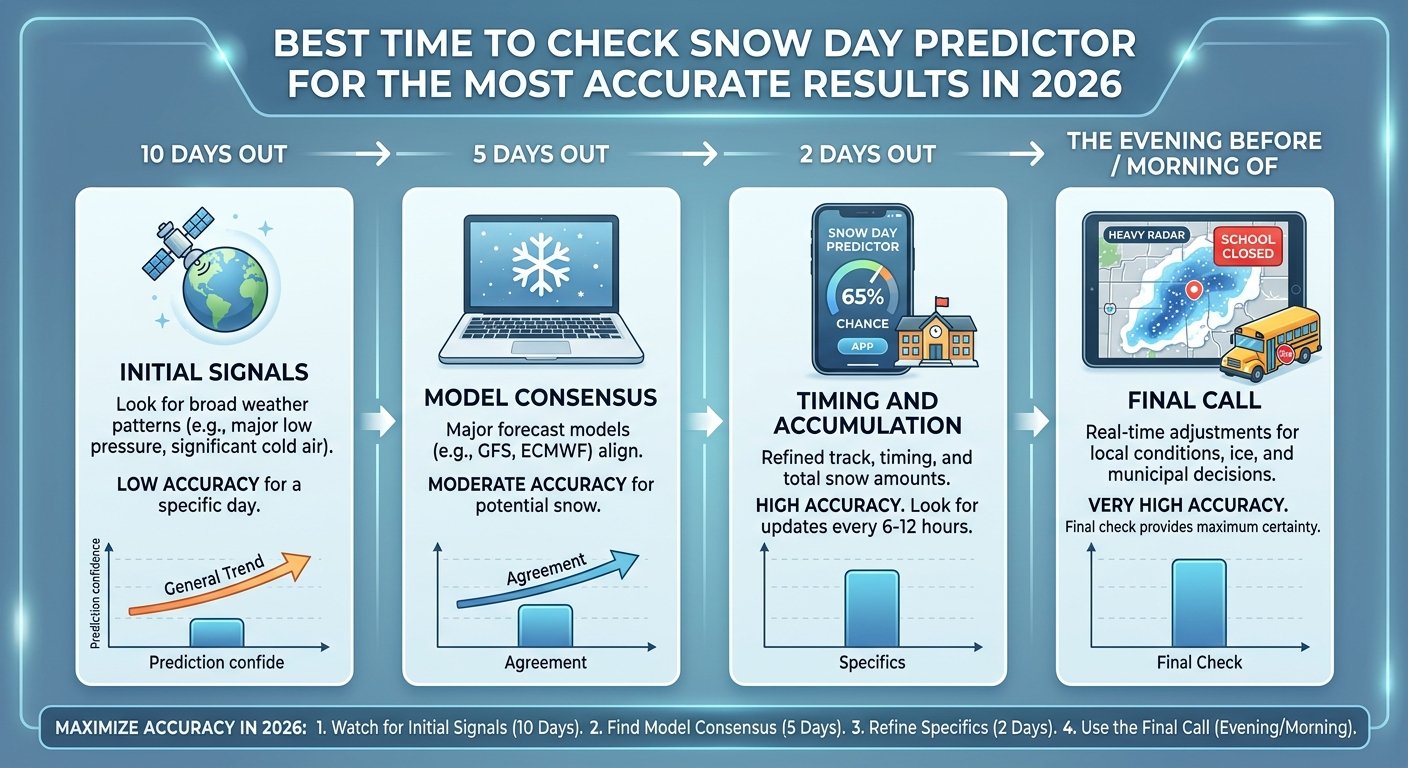
The tool pulls real-time weather forecast data and applies a weighted algorithm to produce a clear percentage score for each of the next seven days.
Southeast Michigan: Detroit and the Metro Area
Detroit and the surrounding southeastern Michigan metropolitan area, including Wayne, Oakland, Macomb, Washtenaw, and Livingston counties, experience a combination of weather systems that include Alberta Clippers moving through from the northwest, lake-effect snow from Lake Erie and Lake Huron, and nor'easter systems tracking up from the south and east.
Detroit averages approximately 42 inches of snowfall annually, which is moderate compared to the western and northern parts of the state but sufficient to produce regular school closure events throughout the winter season. The Detroit Public Schools Community District serves approximately 50,000 students and makes closure decisions independently from the hundreds of suburban districts surrounding the city, meaning Detroit city schools and suburban districts frequently make different decisions for the same storm.
Oakland County and Macomb County suburban districts, including Troy, Sterling Heights, Utica, and Royal Oak, tend to have somewhat higher closure thresholds than rural Michigan districts because their road networks are dense, well-maintained, and treated quickly during storms. Many suburban Detroit families find that Snow Day Predictor's ZIP code-specific forecasting is particularly valuable because weather conditions and district policies vary significantly across the metropolitan area.
West Michigan: Grand Rapids and the Lake Michigan Snow Belt
Grand Rapids and the greater west Michigan region, including Kent, Ottawa, Allegan, and Muskegon counties, sits directly in the primary lake-effect snow belt downwind of Lake Michigan. This geographic reality makes western Michigan one of the snowiest regions in the eastern United States on a consistent basis.
Grand Rapids averages approximately 75 inches of snowfall annually, nearly double the Detroit average. Communities closer to Lake Michigan, including Holland, Muskegon, South Haven, and Benton Harbor, frequently receive even higher totals during intense lake-effect events. The lake-effect snow belt in this region is oriented roughly north to south, meaning communities within the belt can receive several feet of snow from a single prolonged lake-effect event while communities just 30 miles east receive only a few inches.
Lake-effect events from Lake Michigan are driven by northerly and northwesterly winds that funnel Arctic air across the lake. When a lake-effect band sets up over a specific location, which can occur for 24 to 48 hours at a time, snowfall rates can reach 3 to 5 inches per hour, producing totals that quickly overwhelm any road treatment capacity. School closures during intense lake-effect events in west Michigan are essentially automatic once a band becomes established over a district.
Central Michigan: Lansing, Flint, and the Interior
Lansing, Michigan's capital city, and the greater central Michigan region including Flint, Saginaw, Bay City, and Midland experience a transition zone between the lake-effect influenced western regions and the less snow-heavy southeastern regions. These communities receive lake-effect snow from both Lake Michigan to the west and Lake Huron to the east, depending on wind direction, but the intensity is generally lower than in the primary belt communities.
Lansing averages approximately 48 inches of snowfall annually. The Lansing School District and surrounding Ingham County districts make closure decisions that reflect the moderate but consistent winter weather typical of central Michigan. Flint and Genesee County districts face additional complexity because the region's economic challenges have affected road maintenance infrastructure, meaning closure thresholds may effectively be lower than similar communities with better-funded highway departments.
Northern Michigan and the Upper Peninsula
Northern Michigan, including communities such as Traverse City, Petoskey, Gaylord, and Alpena, experiences some of the heaviest snowfall in the Lower Peninsula. Gaylord, located in Otsego County at higher elevation, averages approximately 160 inches of snowfall annually and frequently records some of the deepest daily totals in the state during major storm events.
The Upper Peninsula of Michigan represents a separate weather world entirely. Communities including Marquette, Sault Ste. Marie, Houghton, and Ironwood experience annual snowfall totals that rank among the highest in the eastern United States. Marquette averages approximately 160 to 180 inches annually. The Keweenaw Peninsula in the far northwest Upper Peninsula, which juts into Lake Superior and sits in the direct path of lake-effect systems from the world's largest freshwater lake, averages over 200 inches of snowfall annually and holds records for single-storm totals exceeding 7 feet.
Upper Peninsula school districts are among the most experienced winter weather operators in the country, applying high closure thresholds that reflect decades of adaptation to extreme snowfall. A 12-inch overnight snowfall that would close most Lower Peninsula districts may not close Upper Peninsula schools that have been managing such events routinely for generations.
How Michigan School Districts Make Closure Decisions
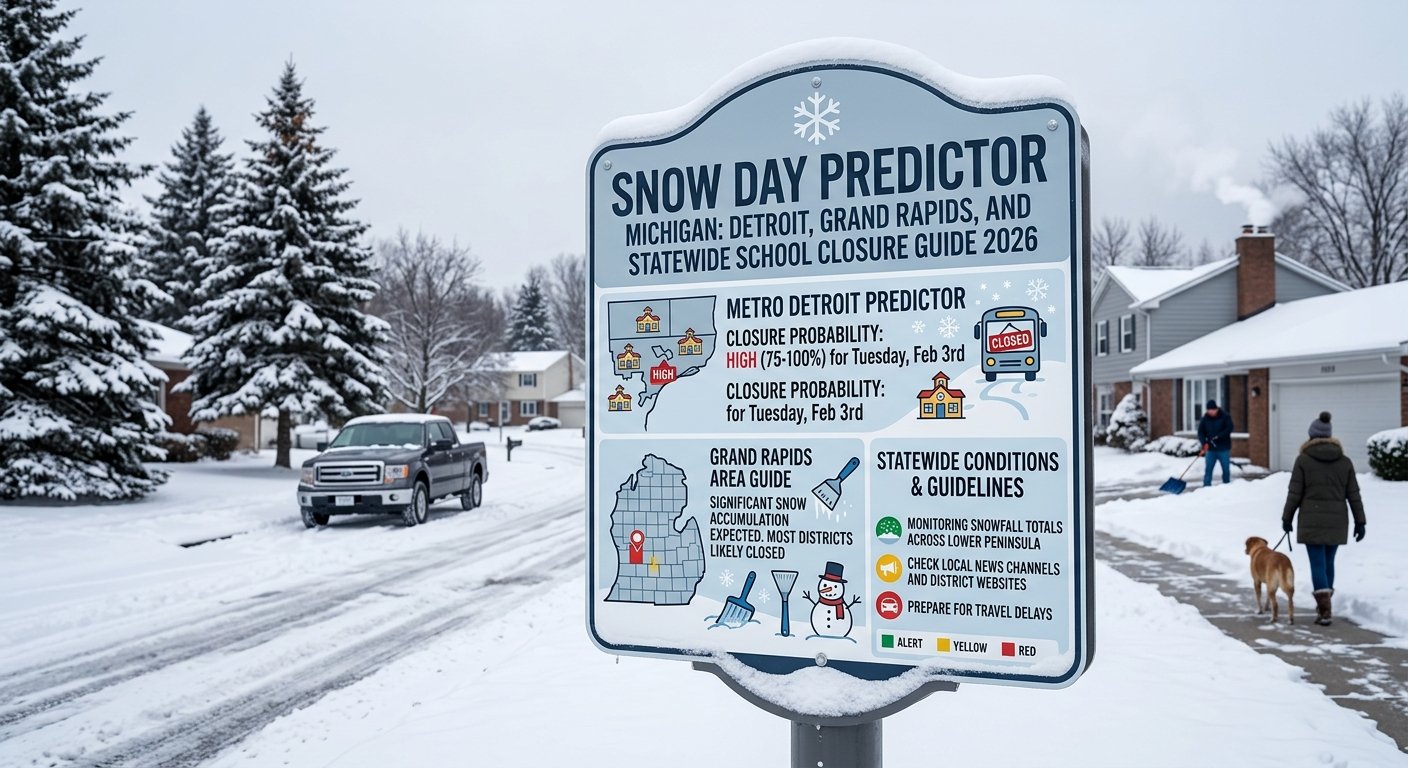
Michigan has over 500 school districts operating under the oversight of the Michigan Department of Education, but closure decisions are made independently by each district's superintendent. The state does not mandate a minimum number of school days but does require a minimum number of instructional hours, and districts that exhaust their emergency closure days must make up time through extended school years or other approved mechanisms.
Michigan superintendents typically begin monitoring road conditions from 2 AM to 3 AM on potential storm mornings, receiving updates from transportation directors who coordinate with county road commissions and the Michigan Department of Transportation. The majority of Michigan school closure decisions are communicated between 4:30 AM and 5:30 AM through automated phone systems, district websites, and local television and radio stations.
Michigan is also notable for its use of online or remote instruction days, known as eLearning days, which many districts implemented following state authorization. Some Michigan districts now use eLearning days rather than traditional snow day closures for moderate weather events, meaning a traditional full-closure announcement may be replaced by an eLearning day announcement that students and parents need to interpret differently.
Most Checked Michigan Cities on Snow Day Predictor
Michigan families check snow day forecasts most frequently for these cities and regions.
Detroit is Michigan's largest city in the southeastern corner of the state. Grand Rapids is western Michigan's largest city in the primary Lake Michigan snow belt. Lansing is the state capital in central Michigan. Ann Arbor is home to the University of Michigan in Washtenaw County. Flint is in Genesee County in central Michigan. Kalamazoo is in southwestern Michigan with significant lake-effect exposure. Saginaw is in the Saginaw Valley in east-central Michigan. Muskegon sits directly on Lake Michigan with extreme lake-effect snow exposure. Traverse City is in northern Michigan with high annual snowfall totals. Marquette is in the Upper Peninsula with 160 to 180 inches of annual snowfall.
Check Michigan Snow Day Chances Right Now
Whether you are a student in Detroit monitoring a nor'easter or a parent in Grand Rapids watching a lake-effect warning develop, Snow Day Predictor gives you the clearest picture available.
Visit snowdaypredictor.xyz to check Michigan snow day chances for your city or ZIP code instantly, completely free.